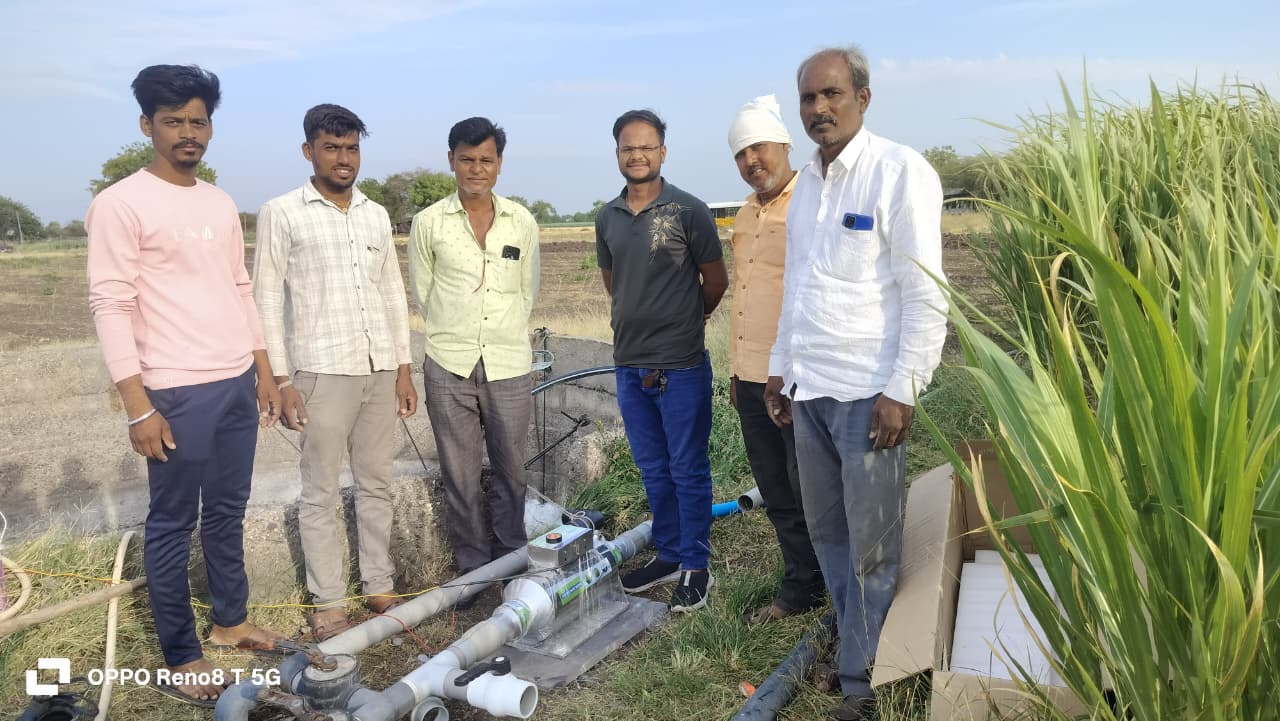
Across large parts of Maharashtra, borewell and groundwater sources carry high concentrations of dissolved salts and minerals — commonly known as hard water. For farmers relying on this water for irrigation, the effects build up slowly but can seriously impact both soil health and equipment lifespan over time.
How hard water affects soil
When hard water is used repeatedly for irrigation, dissolved salts gradually accumulate in the topsoil. Over seasons, this can lead to visible white salt crusts forming on the surface — a sign that soil salinity is rising. Salt-affected soil holds water less effectively and can make it harder for plant roots to absorb moisture and nutrients.
The impact on drip irrigation systems
Drip irrigation is widely used across Maharashtra's sugarcane, cotton, and vegetable farms for its water efficiency. But hard water is a common cause of dripper and nozzle clogging — mineral deposits build up inside narrow drip lines, restricting flow and forcing farmers to spend time and money on cleaning or replacing parts.
What farmers can do
Treating water before it reaches the field — rather than dealing with soil and equipment damage after the fact — is the more sustainable approach. Chemical-free water conditioning technologies, like the Guardneer Hard Water Conditioner, are designed to address hard water at the source, without adding salts or chemicals to the field.
If you're dealing with white soil crusts, frequent dripper blockages, or reduced irrigation efficiency, it's worth having your water source assessed before the next planting season.
Have questions about Guardneer?
We respond within 2 hours.